
Your cart is currently empty!
Transform Your Office with Art That Fuels Creativity
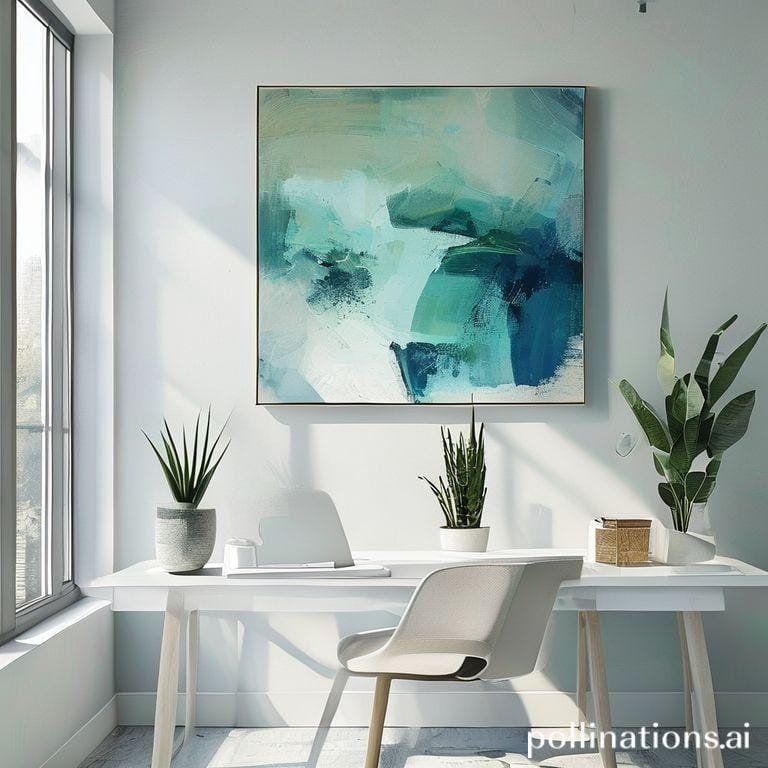
Have you ever looked at a blank wall in your office and felt your creative energy slowly disappear? Your workspace is more than just furniture. It’s like the weather inside a room—it can change how you feel, how well you concentrate, and your ability to come up with new ideas. When trying to be productive, many people forget about one simple but powerful tool: wall art. The right pictures or designs can act like a spark for your brain, turning a plain office into a garden where ideas grow. This isn’t just about making a place look nice. It’s about carefully designing your surroundings to help your thinking and your mood.
This article will show how choosing art on purpose can change your office from a basic work area into an active center for creativity. We will look at the science of how what you see affects your brain, find specific types of art known to help your mind work better, and give you practical tips to build your own inspiring collection. Whether you are setting up a big company office, a home studio, or just a small corner for focused work, these ideas about creative wall art work for everyone. By the end, you will have a clear plan for choosing art that doesn’t just cover the wall, but actually fills you with the energy to create, solve problems, and do your best. Let’s rethink what your office walls can do for you.
The Science of Sight: How Visual Art Talks to Your Brain
The link between what your eyes see and how your mind works is built into your brain’s wiring. Looking at art is not a boring task; your brain starts a complicated dance of seeing, feeling, and thinking. Research on how spaces affect people consistently shows that visually pleasing and meaningful places can lower stress, improve how well you think, and encourage creative thought. For example, a study in the Journal of Environmental Psychology found that workers in offices with art and plants said they felt 15% better and were better at solving problems compared to people in bare, art-free spaces.
Art works like “visual coffee.” It gives your mind gentle, quiet stimulation that can prevent mental tiredness during long jobs. Abstract art, with its shapes that are open to interpretation, encourages your brain to branch out and think of many different ideas. On the other hand, realistic art showing nature scenes can lower stress hormones and create a calm, focused state that is perfect for detailed work. The important part is doing it on purpose. As psychologist Dr. Craig Knight, who studies workspace design, says:
“The evidence suggests that people are most productive in spaces they feel they have some control over and that reflect their identity. Art is a primary means of achieving that personalization and psychological comfort.”
By choosing art that means something to you personally, you create a positive cycle where your surroundings support your mental processes. This makes creativity feel less like a hard climb and more like floating down a river.
Choosing for Focus: Art That Cuts Out Noise and Helps You Get in the Zone
Not all art is good for the office. The main goal for areas where you need to concentrate deeply is to support focus and help you get into a state of “flow,” where you’re completely absorbed in your work. Here, simpler is usually better. Art that is too busy, chaotic, or exciting can break your attention. Instead, pick art that has a feeling of order, balance, and quiet complexity. Simple abstract pieces, peaceful landscapes, or elegant black-and-white photos are great choices. These works give your eyes something interesting to look at without forcing your brain to constantly figure them out, letting your mind stay on your task.
Think about the colors carefully. Blues and greens are famous for their calming, focusing effects, making them perfect for computer work or reading. Soft earth tones (like browns and tans) can create a steady, stable feeling. One single, bright color in a mostly quiet piece can act like an energetic bullseye without being too loud. Where you put the art matters too. Place art where you can see it directly during short breaks, or just off to the side as a nice background detail. The art should feel like part of the room’s structure—built-in and helpful, not yelling for your attention. The idea here is to create a visual “white noise” that blocks out mental clutter and helps you pay attention for a long time, turning your office into a quiet room for focused thought.
The Motivational Muse: Art That Gives You a Push
For spaces where you brainstorm, share ideas, or work on tough projects, art can be a direct source of motivation. This is where art with a clear theme or message works best. Pictures that bring up ideas like climbing, breaking through, exploring, or bouncing back can quietly strengthen a mindset focused on growth and learning. Think of photos showing huge mountain tops, which can stand for goals and success, or abstract art with lines that stretch upward and compositions filled with light.
Quotes or word art, when designed beautifully, can be strong reminders. A well-placed, artistically made phrase like “Begin Anywhere” or “What If?” can help you through a creative block. Famous pictures from your job—like a classic blueprint for an architect, a neat math equation for a data scientist, or a stylish drawing of a circuit board for an engineer—can confirm your professional identity and passion. The art in this group should tell a story or ask a question that matches the purpose of your work. It acts like a visual coach, a reminder of the “why” behind your daily effort. By surrounding yourself with symbols of big goals and success, you set up your environment to constantly push you toward better work and bigger thinking.
Bringing the Outside In: Nature Art to Recharge Your Mind
People naturally love nature—this idea is called biophilia. Bringing this into your office through art is one of the best ways to fight mental tiredness and light up new ideas. Nature-themed art isn’t just attractive; it heals your mind. Studies, like ones from the University of Exeter, show that workspaces with natural elements can increase productivity by over 15% and boost creativity by giving a feeling of liveliness.
Go further than simple pictures of flowers. Look for art that captures the heart of natural processes: the detailed pattern of fern leaves (patterns that repeat in nature are known to lower stress), the moving flow of a river, the huge quiet of a forest, or the complex design of a beehive. Extreme close-up photos of leaves or rocks show a hidden world of texture and shape that can inspire new patterns and answers in your own work. Very large landscape photos can create the illusion of a window to a wide-open view, fighting the feeling of being trapped in a box. This section shows that nature-inspired art offers a mental escape ladder. When straight-line thinking fails, a look at a piece of nature art can give your subconscious the restart it needs to look at a problem from a new, more natural direction.
Making It Yours: Art That Shows Who You Are
The most powerful office art is the kind that speaks directly to you. A workspace that feels like anyone’s will produce average thinking. Adding your personal touch is the secret ingredient that changes a company’s office into your creative command center. This means picking art that shows your interests, what you value, and your style. It could be a piece from a local artist you like, an old poster from a favorite movie that talks about storytelling, or abstract art in colors that you find full of energy.
The process of choosing this art is itself a creative act. It makes you decide what inspires you. Do you do your best work with bold, sharp shapes or soft, flowing forms? Are you pushed forward by historical people, futuristic ideas, or the beauty of everyday things? Letting this personal identity show on your walls creates a deep sense of ownership and comfort. As organizational psychologist Adam Grant points out:
“The best workplaces aren’t designed to make people work harder. They’re designed to help people work better. And feeling ‘at home’ in your space is a cornerstone of that.”
Your art collection becomes a quiet announcement of your creative beliefs, a daily reminder of your special point of view, and a constant source of real inspiration that no standard office picture can ever give you.
Keeping It Fresh: Changing Art and Interactive Pieces
Creativity loves new things. A space that never changes, no matter how well it is designed, can eventually become invisible to your used-to-it brain. To keep the inspiration flowing, think about using a changing approach to your office art. Create a “gallery wall” with a system that lets you easily switch out smaller prints, photos, or even pieces of fabric. Plan to change a few pieces every season or every few months. This rotation brings in new things to look at, which prompts new connections in your brain and stops your creativity from getting stuck.
Look into interactive or changeable art. This could be a magnetic board where you arrange shapes into new designs, a framed chalkboard or whiteboard for quick drawings and notes, or even a digital frame that cycles through a chosen folder of artwork and photos. The act of changing the art becomes a small creative habit—a deliberate refresh of your mental workspace. This plan is especially useful in team spaces, where a changing gallery can show current projects or team successes, making the creative process itself visible and celebrated. A dynamic wall is a living thing that grows and changes with you, making sure your environment never stops helping your creative growth.
Putting It All Together: Building Your Creative World
Great art needs a great setting. The effect of your office art is made stronger by thinking carefully about where and how you place it. Think of your walls as the canvas for your whole environmental design. For a main point of interest, choose one standout piece for the wall across from your desk or in your main line of sight during breaks. This should be the piece that best represents your core creative motivation.
Use smaller, matching pieces to create visual paths around the room. Groups of two or three related works can create a stronger “zone” of inspiration than single pieces scattered around. Pay attention to lighting; a well-aimed picture light can lift a piece from decoration to masterpiece, drawing your eye and adding depth. Make sure the size of the art fits the wall and furniture—a tiny print on a huge wall feels nervous, while a piece that’s too big can feel crushing. The final arrangement should feel balanced and planned, guiding your eye on a relaxing trip around the room. This careful arrangement turns individual artworks into a united, supportive world where every look gives you a moment of refreshment or a spark of an idea, smoothly mixing art into the daily beat of your work.
The trip through these ideas shows one main truth: your office walls are not just passive borders but active team members in your creative life. From using brain science with focused, simple art to fueling motivation with famous pictures, and from recharging with nature scenes to stating your identity through personal choice, each plan offers a different path to a more inspired workspace. The changing approach makes sure this inspiration never gets old. Remember, the goal is not to create a museum but to build a personalized environment that consistently nudges your brain toward openness, focus, and new ideas.
As you start choosing art for your office, let these ideas guide you, but let your personal feeling be the final judge. The piece that gives you a jump of energy, a moment of peace, or a flash of an idea is the right piece for your wall.