
Your cart is currently empty!
Mastering the Art of the Gallery Wall
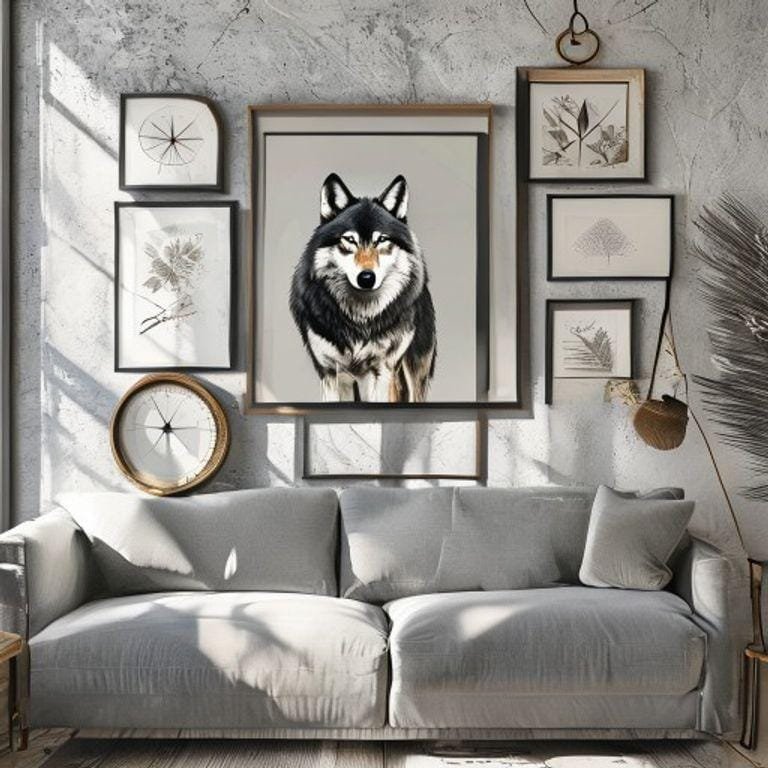
There’s something truly special about a well-put-together gallery wall. Think of it as more than just a bunch of pictures. It’s like a story told through images, your own personal museum, and the very heart of a room. In a world full of digital screens, the real, layered beauty of a gallery wall is a strong answer to things feeling cold and impersonal. It changes a boring, empty wall into something exciting that gets people talking, showing off what you love, where you’ve been, and who you are.
But, going from liking the idea to actually putting it up can seem scary. How do you arrange many pieces without making a messy jumble? What are the tricks to getting that cool, stylish look that seems gathered slowly over years? This guide is your step-by-step map. We’ll make the process clear, from picking your idea and finding art to learning layout tricks and the final, rewarding step of hanging it all. And for anyone looking for the perfect pieces to start their collection, Paw Creativ is a great place to begin. They offer amazing animal-themed art of top quality, giving you the perfect starting point for any gallery wall story.
Chapter 1: The Blueprint – Picking Your Idea and Theme
Before you hammer a single nail, the best gallery walls start with a clear plan. This first step of thinking it through is super important. It gives you the connecting thread that will tie all your different pieces together. Start by asking yourself: What is this wall for? Is it to celebrate your family in the living room, to give peaceful ideas in a home office, or to make a big, bold welcome in an entryway? What the room is used for should guide your art choices.
Next, think about your main theme. This doesn’t mean every piece has to be the same. Instead, it’s about making things work together through one common thing. Popular and flexible themes include:
- One-Color Wonder: Using art from just one color family (like all black and white photos, or different blues) makes a look that is instantly classy and unified.
- Subject-Based Tales: This could be a wall just for plant prints, building drawings, or, as we love at Paw Creativ, the amazing beauty of animals. A group of wildlife art, from a strong wolf picture to a tiny hummingbird, tells a story about all the different kinds of nature.
- Mixed Materials & Feel: Put together canvas prints, framed photos, woven wall hangings, and small 3D objects. The mix of materials adds great depth and interest you can touch.
- The “Collected” Look: This theme loves a mix of styles. It might combine old maps, modern abstract art, kids’ drawings, and old plates, all tied together by using the same kind of frames (like all black or natural wood).
As designer Emily Henderson says,
“A gallery wall should feel like a collection, not a collision.”
Your theme is like the curator’s guiding hand that makes sure each piece, while special on its own, adds to a beautiful total picture. Once your plan is set, you can start the fun search for art that you really connect with.
Chapter 2: Building Your Collection – Choosing the Right Art
With your theme as your guide, the real fun starts: putting together your collection. The trick is to look for variety within the rules you’ve set. Try for a mix of sizes (big eye-catching pieces, medium-sized anchors, and small filler pieces), directions (tall and wide), and art styles. Don’t be scared to add 3D objects like pretty plates, wall lights, or even a small shelf with a favorite little statue.
When choosing art, pick pieces that mean something to you personally or make you feel something strong. This is what changes a display from being just okay to being truly interesting. A gallery wall is a perfect chance to show off a loved Paw Creativ canvas of your favorite animal next to a cool old postcard you found or a special photo from a great hike.
Quality is important, especially for your main pieces. Spending money on well-made art on strong materials means your gallery wall will look great for a long time. As one interior design blog suggests,
“Choose a few ‘hero’ pieces you absolutely love, and build around them.”
These heroes are the anchors of your layout. For animal lovers, a large, striking canvas of a walking panther or a calm group of elephants from Paw Creativ can be that perfect, conversation-starting centerpiece.
Chapter 3: The Puzzle of Placement – Layout Tricks Made Simple
This is where your plan meets reality. Laying out all your pieces before you hang them is a must-do. The most common and useful methods are:
- The Salon-Style (or Grid) Layout: Great for a group of same-sized frames, this creates a neat, orderly, and modern look. The frames line up in straight rows and columns.
- The Organic Cluster: This is the classic “collected” look. Pieces of different sizes are put in a loose, not-perfectly-balanced group, often spreading out from a middle point. The outside edges are wavy, which creates lively energy.
- The Symmetrical Layout: A mirror-image arrangement around a center line. This feels balanced, formal, and relaxing. It works very well in traditional rooms or with pairs of similar items.
- The Linear Layout: Pieces are hung in one straight line, either sideways along a couch or straight up a staircase wall. This is simple, elegant, and good for thinner spaces.
To plan, clear a big space on the floor (or use a big piece of craft paper cut to your wall’s size). Arrange and move your pieces around until the whole group feels balanced. Pay attention to “visual weight”—darker, bigger, or busier pieces feel heavier and should be balanced by lighter, simpler ones. Step back often to look at it from across the room. A good rule from professional installers is to keep 2-3 inches of space between frames so it looks connected, not squished.
Chapter 4: Framing and Matting – The Final Details
Frames are the quiet champions of a gallery wall. They can either pull a mixed collection together or carefully spotlight single pieces. For a unified look, pick one frame finish to use everywhere—black, white, natural wood, or gold are always good choices. For a more mixed, “collected” feel, use different frames but keep one thing the same, like all wood colors (walnut, oak, maple) or all metal finishes.
Matting (the border inside the frame) is a powerful tool. It gives the art room to breathe, makes colors stand out, and can help make the outside size of different pieces the same. A white or off-white mat is a classic choice that makes colors bright and works with any style. For a bold look, try a colored or black mat that matches a color from the art itself.
Don’t forget about the glass! For valuable art or pieces in very sunny spots, think about UV-protective glass to stop fading. The right framing lifts your art from a simple picture to a polished part of your home’s design.
Chapter 5: The Hanging – Putting It Up with Sure Hands
Now for the big moment. Having the right tools is key: a level, a measuring tape, painter’s tape, a pencil, and the right wall hooks for your wall (drywall anchors for heavier pieces). Start by hanging your biggest or central “anchor” piece first, usually at eye level (57-60 inches from the floor to the middle of the art is a standard height). Build out from there.
Use the paper template method for accuracy: trace each frame onto craft paper, cut out the shapes, and tape them to the wall with painter’s tape. This lets you see and change the whole layout without making a single hole in the wall. Mark where the hanging hardware is on the paper, then put your nail or hook right through that spot. As the old saying goes,
“Measure twice, cut (or hang) once.”
Don’t rush; being patient here results in a perfectly lined-up display.
Chapter 6: Lighting and Change – Making Your Wall Come Alive
A gallery wall is not a frozen statue; it’s a living part of your home. Good lighting is very important. If you can, use picture lights or adjustable track lighting to shine on specific pieces and avoid bright reflections. The general light in the room should help, not fight with, your display.
Most importantly, allow yourself to let your gallery wall change over time. The great thing about this design is that it’s flexible. Found a new print at a market that would be perfect? Switch it in. Your collection got bigger? Make the wall bigger. As your life and tastes change, so can your art. A gallery wall is a mirror of your journey, meant to be updated and loved for a long time.
Making a stunning gallery wall is all about personal expression and design feeling. By starting with a clear plan, choosing pieces on purpose, planning your layout carefully, and hanging with attention, you can change any wall into an amazing focal point. It’s about telling your story through art. Remember, the goal isn’t to be perfect, but to have personality. Let your collection be as unique as you are. And when you’re looking for that key piece—a work of art that mixes deep feeling with great skill—check out the chosen collection at Paw Creativ. From the wild beauty of a running horse to the knowing look of an owl, our animal-themed art is made to inspire and become a loved part of your home’s story for years. Start your gallery wall adventure today, and turn your walls into a canvas for your life.