
Your cart is currently empty!
From Cave Walls to Canvas The Journey of Wall Art
Think about the first person who ever pressed their hand against a wet cave wall. They left behind more than just color; they left proof they were there. This deep need to decorate our spaces, to turn empty walls into stories about who we are, is a rope that ties all people together through time. Wall art, in all its shapes and sizes, is not just something pretty to look at. It is a history book of human life, a mirror that shows our changing beliefs, tools, and ideas about beauty. From the holy bison painted in ancient caves to the smooth digital art in a modern apartment, the story of wall art is our story—our worries, our victories, and our never-ending wish to make beautiful things. Today, we stand where old ways meet new ideas. This change gives us more than just facts about the past; it gives us a world of ideas for making our own personal spaces special.
The First Canvas: Ancient Starts
The tale of wall art starts not in museums, but in the deep, echoing rooms of caves from before written history. Places like Lascaux in France and Altamira in Spain, from over 17,000 years ago, show us humanity’s first art shows. These were not simple drawings. They were skilled pictures of animals—like bison, horses, and wild cattle—made with an amazing sense of shape and motion using charcoal and colored earth. The reason was probably spiritual or part of a ceremony, a kind of wishful magic to help hunters or to respect the animals that gave them life. As expert Jean Clottes has said, these pictures were made in
“the bowels of the earth,”
hinting at a powerful link to the world below and things beyond nature. The wall was not just a blank slate but a key part of the ritual, like a thin skin between the human world and the spirit world. This set down the basic rule that wall art holds meaning deeper than just looking nice; it fills a place with importance. The methods were hands-on and physical: blowing paint from the mouth, drawing with lumps of rock, or using hands as outlines. This close, bodily way of creating is very different from how we do it today, yet the heart of the urge—to mark a space as ours and tell our tale—stays the same.
Societies in Hue: The Old and Middle Ages
As people formed towns and kingdoms, wall art changed from cave ritual to government messaging and praise for gods. In ancient Egypt, paintings in tombs and carvings in temples had a clear job: to help and supply the dead person in the next life. Pictures of everyday activities, gods, and rulers were made in a very formal, ranked style, using paint from minerals on smooth plaster. The walls of the Tomb of Nebamun, for example, are full of lively scenes of hunting and parties, meant as supplies forever. At the same time, in the Roman Empire, paintings in villas like those saved in Pompeii showed amazing tricks of the eye.
Art expert John R. Clarke says the “Second Style” of Roman painting made “architectural vistas that seemingly expanded the confines of the room,”
a clever visual trick that brought the outdoors inside. This move from symbolic pictures to realistic illusions was a big change in style. In the medieval period, the focus went back to the holy. The tall walls of Gothic cathedrals became canvases for Bible lessons through colored glass and painting series, like Giotto’s important work in the Scrovegni Chapel, which brought in new emotional feeling and realism. The wall was now a page in a sacred book, teaching religion through beauty.
The Big Change: The Renaissance
The Renaissance totally changed wall art, lifting it to the top level of great art and skill. The creation of linear perspective by Filippo Brunelleschi gave artists like Masaccio, Raphael, and Michelangelo the keys to make stunning, solid three-dimensional worlds on flat walls. The fresco method, painting onto wet plaster, was mastered, letting the colors stick to the wall surface for good. Michelangelo’s Sistine Chapel ceiling is the greatest example from this time, turning architecture into a vision of the universe.
As Michelangelo himself is said to have complained, the physical cost was huge, but the outcome was a “divine” mixing of painting, carving, and building.
This time also saw the growth of the paid mural for private mansions, mixing old myths with pictures of the people who paid for it, making the wall a sign of riches, power, and smart taste. The idea of the artist as a single brilliant mind, not just a namemaker, started here, changing forever how people saw wall art. The wall was no longer just a holder; it was a teammate in a grand artistic conversation.
From Mansion to Living Room: Art for Everyone
For hundreds of years, big wall art belonged to the church, the government, and the super-rich. The real shift to art for all people began with the invention of printmaking, like woodcuts, which let many copies of images be made. However, the huge earthquake of change happened in the 1800s and early 1900s. The Industrial Revolution brought new, cheap colors and the power to make low-cost paper prints and posters. Art Nouveau artists like Alphonse Mucha brought lovely art to regular people through ads. Later, groups like Arts and Crafts, led by William Morris, pushed for art in the home as a needed good and beautiful thing for everyone. The wall in a normal house could now be a place for personal style and cultural interest. This time built the base for the modern idea of interior design, where wall art is a main piece of showing who you are. It moved the spotlight from public, teaching art to private, decorative, and personal art, making beauty something you could buy and choose for yourself.
The Modern Split and the Pop Art Bang
The 1900s broke old ideas about wall art. Modernist groups like Abstract Expressionism (think of Jackson Pollock’s drip paintings) said no to realistic pictures completely, focusing on color, movement, and feeling. The wall became a field for pure shapes and colors. This was followed by the bold challenges of Pop Art in the 1960s. Andy Warhol’s famous silkscreens of Campbell’s Soup Cans or Marilyn Monroe, made in big numbers and bright, blurred the line between high art and commercial pictures.
Warhol famously said, “I think everybody should be a machine,”
welcoming copying and questioning the old Renaissance dream of a one-of-a-kind masterpiece. Pop Art brought ideas from fancy galleries into everyday language, making art about modern life and buying culture. It made wall art easier to get, more ironic, and mixed with the modern world. At the same time, photography growing as a fine art gave walls a new kind of window—one that caught frozen pieces of real life. These movements together stretched the very meaning of what wall art could be, preparing the ground for the endless options of the computer age.
The Computer Sunrise and the Time of Making It Yours
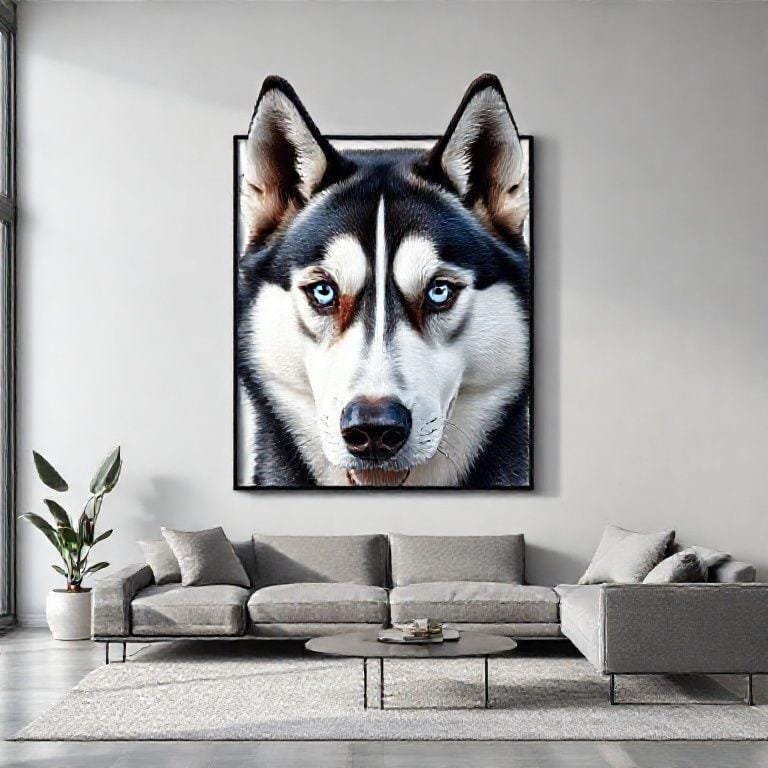
We are now in the newest, easiest-to-reach part of this story: the digital age. High-quality printing tech, like giclée prints on special paper or canvas, lets copies good enough for museums and original computer art be made when you ask for it and sent anywhere. Websites have made a worldwide store, linking artists straight to people who love art. This has started a time of making things personal like never before. You are no longer stuck with posters everyone has. Now, you can find art that talks right to what you love—whether that’s an ultra-real picture of your favorite dog, a simple shape design, or an old-fashioned travel poster. The wall has become the most personal screen there is. This opening-up means your home’s look can be as special as you are, telling your own story with truth and style. It completes the ancient human wish to make a space your own, but with a modern toolbox of endless choice and ease.
Taking the History Home: Picking Your Space
Knowing this full past gives you the power to choose what goes on your walls with purpose. The secret is to mix this history with your own life story. Start by thinking about what a room is for: look for peace in a bedroom with a soft abstract or nature photo, or spark ideas in a home office with strong, graphic prints. Mixing time periods can create lively energy—put an old plant drawing next to a modern word art piece. Size is very important; one big, eye-catching piece can hold a room together, while a planned group of smaller pieces can tell a many-sided story. Most of all, pick art that makes you feel something. Does it make you happy? Does it bring back a memory or a hope? Your walls should show the parts of your own changing story. In this way, for people who find their happiness and comfort in animals, places like Paw Creativ show a lovely blending of this whole historical trip. They mix the always-appealing look of animal pictures—which calls back to humanity’s old link to the natural world—with modern digital printing and a chosen style. This lets you easily bring a piece of this artistic change into your home, making a space that feels both personal and linked to the bigger story of art and life.
The trip of wall art, from the waving torchlight of ancient caves to the clear screens of today, is proof of humanity’s unstoppable creative heart. Each time period, with its own special tools and beliefs, has added a layer to how we see art shaping a space and showing who we are. The Renaissance gave us depth, the Modernists gave us freedom, and the Digital Age has given us the chance to get it. Today, we have the special honor of being able to pull from all this rich history to make homes that are deeply personal safe places. Whether you love the ancient, the classical, the abstract, or the super-realistic, your choices add to this continuing change. By carefully choosing art that speaks to you, you do more than just decorate; you join in an age-old human habit of telling stories and making beauty. So see your walls not as empty spaces, but as canvases waiting for the next part—your part—in the amazing, never-ending story of art.