
Your cart is currently empty!
Master the Art of Eclectic Style Mixing
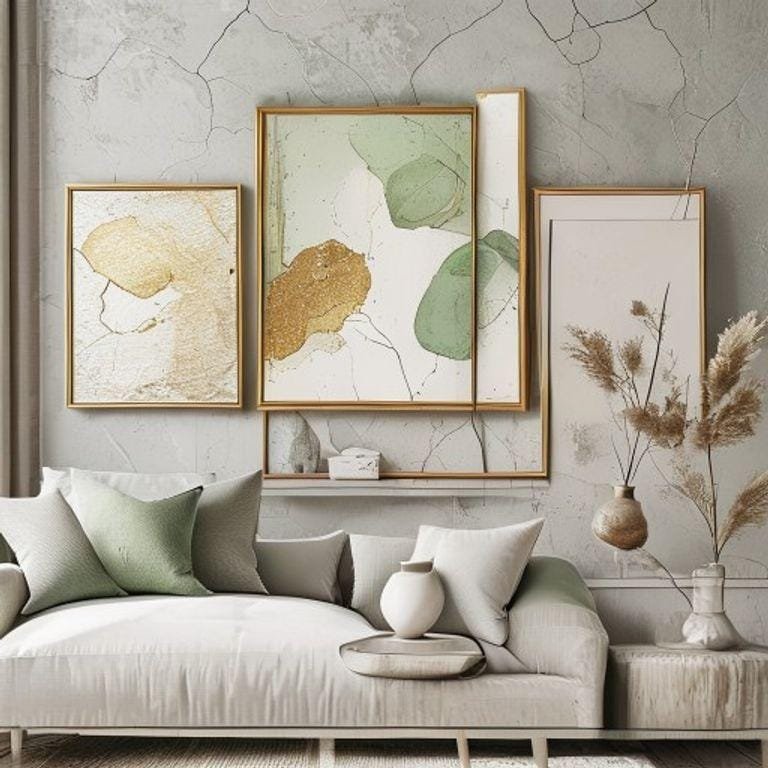
Think of your home as a blank page in a journal. The art you choose is like your handwriting—it’s personal and tells your story. Mixing different kinds of art—like wild abstract paintings, old-fashioned vintage prints, and clean modern pieces—might seem scary. It can feel like mixing patterns that don’t match. But the most interesting and personal rooms often come from this very mix. A carefully chosen collection of different styles shows who you are. It shows the things you love and the places you’ve been. It’s better than copying a page from a furniture store catalog. This guide will help you learn how to do it. We’ll give you clear steps to blend emotional abstract art, charming vintage finds, and sharp contemporary pieces into one beautiful picture. When you finish, you’ll see your walls not as a problem, but as a chance to start a creative conversation between different times and styles.
Chapter 1: Start with Something That Ties It All Together
Before you put anything on the wall, you need one thing that connects all your different pieces. Think of this as the glue for your collection. The best connecting elements are often quiet and simple.
One idea is to use a color scheme. This doesn’t mean everything has to be the same color. It means a few colors show up again and again. A soft green might be in a wild abstract painting, an old plant print, and a simple modern shape. This makes a pattern your eye can follow. Another idea is to use the same kind of frame. Putting very different artworks in the same simple black or natural wood frames makes them look like they belong together. The frame acts like a quiet border, letting the art inside be the star.
You can also connect art through what it’s about. If you love nature, you could group an abstract painting of tree bark, an old picture of a bird, and a modern photo of a tiny leaf. The shared topic gives your collection a common idea. As design expert Justina Blakeney says,
“Eclectic style is all about high contrast, but it needs a baseline of harmony. Find one thing—a color, a material, a vibe—and let that be your home base.”
Start with this connecting idea, and your mix will look planned, not messy.
Chapter 2: Using Size and Position Like a Pro
Once you have your connecting idea, think about how the art will sit on the wall. Where you put art and how big it is are very important for a lively look.
Create a main attraction with your biggest piece. This is usually a bold modern painting or a big abstract work. Let it be the star. Then, add smaller pieces around it. A large old map can be surrounded by small, simple abstract squares. Using different sizes makes things interesting and shows what’s most important. Don’t worry about making things perfectly balanced on both sides. A perfectly even group of frames can look too stiff. For a mixed collection, try a looser cluster. Put a medium-sized old portrait a little to one side. Balance it with a group of three small abstract sketches on one side and one clean modern drawing on the other.
Think about how much a piece grabs your eye. A dark, detailed old painting has a strong pull. Balance it with a light, airy, large abstract piece on the other side of the room or arrangement. Use empty wall space as a tool. It gives your eyes a place to rest and stops the collection from feeling too busy. Good placement turns separate artworks into one powerful group.
Chapter 3: Connecting Old and New with Feel and Material
How art feels to the touch is a secret tool for mixing styles. It adds a layer you can almost feel, which color and shape don’t do alone. Different time periods use different materials, and showing this difference can look great.
Put the smooth, flat surface of a modern painting next to the cracked paint and rough canvas of an old piece. Place a shiny, digital photo next to a dull, bumpy abstract painting. This back-and-forth between smooth and rough, shiny and dull, makes the wall look deep and smart. Think about the material itself: a sleek metal wall sculpture (modern) can have a great conversation with a delicate, framed old piece of fabric (folk art).
Don’t forget the feel of what’s in the picture. An abstract piece that looks like rough rock goes well with an old photo of a mountain. The idea connects them, while the style and material provide the exciting difference. Mixing textures stops one style from taking over and makes people look closer at each piece to see what it’s made of.
Chapter 4: Making Art Talk to Each Other
The best part of mixing styles is when artworks seem to “talk” to each other. This conversation starts when you put very different things together that share a hidden idea.
Place a strict, geometric abstract (with straight lines and squares) next to a flowing, wavy old piece (like an old poster with vines). The difference in shape is striking and makes you think. Put a very detailed, realistic old drawing next to a simple, modern painting that’s mostly one color. The detail of one makes the simplicity of the other stronger, and the other way around.
To make sure this difference doesn’t become a fight, use a quiet common topic. Maybe all the pieces, in their own way, are about “light.” An abstract with shiny gold, an old sunny landscape, and a modern photo of light bending. Or a topic of “city life”: an abstract made from street posters, an old subway map, and a new building photo. This shared idea gives you a way to understand the style differences, creating a smart collection, not a random pile.
Chapter 5: Adding Your Own Story
This is how your wall becomes truly yours. Mixing art styles isn’t just about looks; it’s about your life. The pieces you pick should mean something to you.
Add things from your own life to your wall. That small abstract you bought on a great vacation, the old postcard from where your family is from, and a modern print from an artist in your town. Their styles are different, but their link to your story ties them together. Let your hobbies and loves guide the mix. A love for music could be shown by an abstract painting about jazz, an old concert poster, and a clean graphic of music notes.
Doing this makes your space feel real. It becomes more than just decoration—it becomes your own special place. When you arrange them, think of the wall as a diary made of pictures. The old piece might show you like history, the abstract shows your feelings, and the modern piece shows you looking to the future. This story is the best connecting idea of all, making any mix of styles feel right and deeply personal.
Chapter 6: Hands-On Advice for Hanging and Choosing
Ideas are good, but you have to do it. Here is practical advice for making your mixed-style wall.
- Start on the Floor: Before using any nails, lay all your pieces on the floor. Move them around. Take a picture of each layout with your phone to see which you like best.
- Use the “Eyeball” Method: For a relaxed look, try to keep a similar amount of space (about 1.5 to 3 inches) between frames, but guess the distance instead of using a ruler for a less perfect feel.
- Add Objects That Stick Out: Break up the flat wall. Put a small shelf among the art and place a small sculpture or an old clock on it. This adds another style and texture.
Choose Carefully: If a piece seems to argue with the others, take it down. Sometimes having fewer pieces is better. A good mix feels full but not stuffed. Lighting is Key: Use small picture lights or track lighting to shine on important pieces, especially textured old works or shiny new ones. Good lighting makes the whole display look united under the same light.
Remember, your first try doesn’t have to be forever. The fun of a mixed collection is that it can change. Switch pieces out when you find new ones. Let your wall be a living, growing show of what you like.
Final Thoughts
Mixing abstract, vintage, and contemporary art is about trusting your creative ideas. It starts with finding one connecting thread—a color, a frame, a topic—that gives a base for variety. Then, it’s a dance of size, texture, and different shapes, all planned to create a lively talk on your walls. Most of all, it’s a chance to fill your space with your personal story, making your home a real mirror of your life and tastes. What you get is a space that feels thoughtful, smart, and special to you—much more fascinating than a room with only one style could ever be.
Ready to start your own art mixing journey? Look at a world of interesting pieces at Paw Creativ. See how our chosen groups of animal-themed wall art, from abstract ideas to old-style drawings and clean modern designs, can give you the perfect pieces for your own style mix. Go to pawcreativ.com to find the piece that talks to you and start making a home that tells your unique story.