
Your cart is currently empty!
Master the Art of Gallery Wall Design
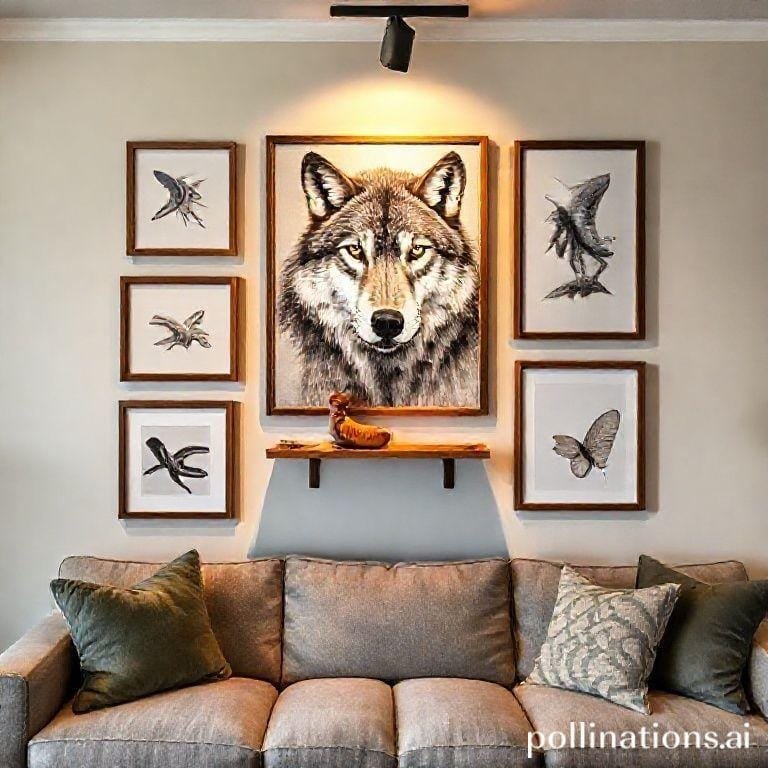
Think of a plain wall in your house. Now, imagine changing it into a lively, personal storyboard that shows who you are, highlights what you love, and becomes the main attraction of the room. This is the power of a gallery wall. It’s not just a bunch of frames. A well-planned gallery wall is like a hand-picked show of your personality, a visual concert that can lift your room from simple to amazing. It’s a kind of art anyone can do, mixing creativity with design rules to make something special just for you.
For people who love animals, a gallery wall is a really great chance. It’s a way to honor the beauty, spirit, and friendship of the animals we love, turning a wall into a loving tribute or a wild refuge. Whether you love the powerful stare of a wolf, the funny moves of a kitten, or the calm beauty of fish, putting several art pieces together lets you create a story that feels right to you. But, going from a stack of nice pictures to a put-together, beautiful display can seem hard. Where do you begin? How do you set them up? What are the rules—and when can you ignore them?
This full guide is made to make the process clear. We’ll take you through each step, from your first spark of an idea to the final step of hanging. You’ll learn how to pick a theme that means something to you, choose the right frames and arrangement, and learn the hands-on skills for a perfect setup. As we go, we’ll show you Paw Creativ, your top spot for high-quality, animal-focused art that can be the perfect start for your gallery wall project. Let’s change that empty wall into your favorite part of the room.
Starting Your Plan: The Big Idea and Theme
Every great gallery wall starts not on the wall, but in your imagination. Before you buy one frame or print one photo, you need a plan. This first thinking stage is key for making a unified look instead of a random mix. Start by asking yourself: What is this wall for? Is it to show family memories, display travel photos, or make an artistic centerpiece? For animal lovers, the answer usually circles back to a love for creatures.
Picking a theme is your first and biggest choice. A strong theme is like a connecting string that ties all your pieces together. For an animal-themed wall, your choices are wonderfully wide. You might choose a single-species theme, giving the wall to the graceful mystery of big cats, the colorful wonder of birds, or the faithful appeal of dogs. Or, a color theme can work very well. Picture a wall of black and white wildlife photos, making a classic, bold effect. Or, a group of ocean-themed art in different blues can create a feeling of peace.
Another way is a style theme. You could mix old-fashioned drawings of bugs with simple modern line drawings of animals, held together by similar frames. The secret is to be consistent within your chosen limits. As famous interior designer Nate Berkus once said,
“Your home should tell the story of who you are, and be a collection of what you love.”
Let your gallery wall be a part of that story.
This is where Paw Creativ is great. Looking through their selected groups can give you lots of ideas. Maybe you love their “Wild Hearts” series, which has strong, close-up pictures of forest animals, and decide to base your whole theme on it. Or, you might pick a few standout pieces from their “Aquatic Dreams” group and add simpler, matching prints. By starting with a clear vision and a place for beautiful, high-quality art like Paw Creativ, you prepare for a gallery wall that is thoughtful, personal, and gorgeous.
Gathering Your Supplies: Picking Art, Frames, and Mats
With your theme ready, it’s time to collect your art pieces. This stage is about choosing—selecting pieces that work well together. A common error is using pieces that are all the same size; this can look stiff and dull. Instead, try for a mix. Put together large standout pieces, medium-sized main pieces, and smaller extra art. The variety makes visual interest and rhythm.
When picking art, think about balance in subject, color, and visual weight. If you have a very bold, dark print of a bear, balance it with a lighter, more gentle drawing of butterflies. Mix directions (tall and wide) to keep the eye traveling. Don’t hesitate to add non-photo items like word art (a favorite animal saying), small sculptures, or even a decorative wall shelf to break up the pattern and add depth.
Frames are the quiet champions of a gallery wall. They can unite different pieces or add a mixed charm. You have two main paths: matching frames or a mixed group. Matching frames (all the same color, material, and width) create a neat, modern, and unified look, letting the art itself be the star. This is a great choice for a strong, single theme like all black-and-white dog pictures.
A mixed group of frames—different colors, woods, metals, and styles—can feel collected, personal, and full of life. The trick to making this work is to keep one or two things the same. For example, use only wooden frames but in different shades, or only black frames but in different styles. Mats (the border inside the frame) are another useful tool. They give the art some space, can help make different-sized prints fit the same frame size, and add a touch of class. White or cream mats are classic and brighten a room, while colored mats can highlight a color within the artwork.
Putting money into quality art prints is very important. Faded colors or blurry images will hurt your whole design. Paw Creativ offers museum-quality prints on excellent paper, making sure the brightness and detail of each animal picture are kept. Their wide range means you can find everything from your main amazing piece to the perfect smaller additions, all with the steady quality that makes a gallery wall look expert and planned.
Drawing Your Plan: Planning Your Layout
Now for the most strategic part: the layout. This is where your gallery wall really forms. Hurrying to hammer nails is the fastest way to annoyance and crooked art. Instead, patience and planning are your best tools. The first step is to measure your wall space. Use painter’s tape to mark the exact rectangle you want to fill on the wall. This gives you a real border to work inside.
Next, make a floor plan. The best method is to draw each frame and mat combo onto craft paper or newspaper, cut out the shapes, and label them. Then, tape these paper patterns to your wall inside the taped border. This lets you try different arrangements for days without making one hole in the wall. You can easily move the patterns around, step back, and look at the setup from across the room.
There are several classic layout styles to think about:
- The Grid: A symmetrical setup of same-sized frames in even rows and columns. It’s orderly, modern, and works very well with matching frames.
- The Salon-Style or Mixed Cluster: This is the most popular method. It involves arranging different sized frames in a natural, clustered shape, often around a center line or piece. The outer edges make a rough rectangle, but inside, it’s active.
- The Line Layout: Frames are hung in a straight line, either sideways or up and down. This is sleek and works well in hallways, above a sofa, or next to stairs.
- The Column Layout: Several up-and-down lines of frames, creating a structured but flexible look.
As you set up your paper patterns, keep a few ideas in mind. Balance is key; spread out visual weight (darker colors, larger sizes) evenly. Keep steady spacing between frames—2 to 3 inches is a standard, comfortable guide that unifies the group. Most importantly, make sure your eye has a natural path to follow. There should be a visual flow, often leading to a center main point—like a stunning Paw Creativ canvas of a wolf’s sharp eyes—that holds the whole arrangement together.
Putting It Together: Composition and Flow
Moving from a basic layout to a polished composition is what separates a good gallery wall from a great one. This part looks at the artistic ideas that make an arrangement feel easy and interesting. Think of your wall as one piece of art, and each frame as a piece within it.
Start by finding your anchor piece. This is usually your biggest, most striking artwork—the heart of your display. In an animal-themed wall, this could be a majestic lion picture or a wide view with wildlife. Put this piece a little off-center, following the “rule of thirds” for a more active feel than putting it right in the middle. Build the rest of your arrangement around this anchor, using other pieces to match and guide the eye toward it.
Create connections between pieces. Put a smaller print of a fawn next to your large deer anchor, making a theme link. Use color echoes; if your anchor has a spot of golden yellow in a tiger’s fur, pick another piece somewhere else in the arrangement that has a similar color, creating a soft visual link. Change the density. Avoid grouping all your dark, heavy pieces in one corner. Spread them out and mix them with lighter, airier pieces to keep balance.
Think about the negative space—the empty wall around and between your frames. This space is not wasted; it’s a key part of the composition. It gives the eye a place to pause and stops the arrangement from feeling crowded. The steady spacing you planned earlier helps handle this negative space well. Finally, think about sight lines from important spots in the room. How does it look from the door? From your favorite chair? The composition should feel balanced and thoughtful from every main viewing point.
This careful choosing is where the art from Paw Creativ really stands out. Their pieces are made not just as single prints, but as parts of a bigger visual story. The artistic style, color groups, and feeling across their collections are designed to work in harmony, making it easier for you to create a gallery wall with expert-level unity and flow.
Making It Real: Hanging Techniques
The planning is done, the composition is set. Now, it’s time to make it permanent. Proper hanging is key for a finished look. Gather your tools: a hammer, a level (a laser level is very helpful), picture hooks or nails right for your wall type (drywall anchors for heavier pieces), a pencil, and a measuring tape.
Begin with your anchor piece. Using its paper pattern still taped to the wall, make a small pencil mark on the wall at the very top center of the pattern. Then, measure the distance from the top of the frame’s hanging wire (when pulled tight) to the top of the frame itself. Move this measurement down from your pencil mark on the wall. This is where your hook will go. Take off the pattern and put in the hook. Hang your anchor piece and use the level to make sure it’s perfectly straight.
With the anchor in place, work outward. Hang the pieces right next to it next, using their paper patterns and the same measuring method. Always use your level to check alignment, not just of single pieces, but in relation to each other. For a salon-style wall, it’s less about everything being perfectly level with the floor and more about steady spacing and alignment with nearby frames.
A pro tip for heavy or valuable pieces: use two hooks or a special hanging system for total security and to prevent leaning. For a completely nail-free choice, think about using strong adhesive strips made for wall art, but always check the weight limits. As you take off each paper pattern and show the real art, the change is very satisfying. Step back often to look at the overall view as it comes together in real life, making small changes as needed.
The Finishing Touches: Lighting and Change
Your gallery wall is hung, but your job isn’t necessarily done. Two last steps can lift it from great to gallery-quality: lighting and allowing for change. Good lighting is what makes your art come alive, especially at night. Harsh ceiling lights can create glare and make the images look flat. Instead, choose accent lighting.
Picture lights mounted above individual key pieces give a dramatic, museum-like focus. Track lighting or adjustable ceiling spotlights can be pointed to wash several pieces in a warm, even light. The goal is to highlight the textures, colors, and details of your art without making shadows from the frames themselves. Lighting not only makes the art easier to see but also adds depth and mood to the whole room.
Finally, remember that a gallery wall can be a living, changing display. Unlike a fixed painting, it has the flexibility to grow and change with you. Leave a little room to grow. As you travel, as your family grows, or as you find new art that speaks to you, don’t be afraid to add to the arrangement. You can exchange smaller prints with the seasons or add a new find from Paw Creativ’s newest collection. The first structure you’ve built gives a strong base that can fit new pieces over time.
This changing quality makes a gallery wall a deeply personal and lasting feature of your home. It shows not just one moment, but a continuing journey. With a base of beautiful, meaningful art from a trusted source, your wall becomes a canvas for your life’s story, filled with the creatures and moments you value most.
A gallery wall is more than decoration; it’s a statement of what you love. It changes empty space into a story, a collection into something to talk about. By following the steps described—from finding your inspiration and picking a unified theme, to carefully planning your layout and learning the hanging—you give yourself the power to create a professional-looking display that brings happiness every day. The process needs thought and care, but the result is a uniquely personal space that shows your passion and creativity.
For animal lovers, this journey is made much easier and more beautiful with the right materials. Paw Creativ is the perfect partner in this creative project. Their focus on quality, their wide and emotional animal pictures, and their understanding of how art lives in a home give you the ideal building blocks. Whether you start with one standout piece or choose a whole collection, their art makes sure your gallery wall will be a stunning, lasting tribute to the animal world. So, gather your ideas, trust your vision, and begin. Your empty wall is waiting to become your masterpiece.